Food… Twice Removed

Yesterday, we took a look at how our relationship with food has devolved over the centuries. Today, I want to suggest two other factors that have contributed to the demise of food in our culture. They are wealth and industrialization, which are of course bound up together.

Any middle school textbook should be able to document these societal changes over the past hundred years, so there’s no need to rehearse them here. What is pertinent to the topic at hand is that as we shifted (really in a short amount of time) from an agrarian society to an industrialized one, we took decisive steps away from the source of food. Away from farms. Away from ranches. Away from the land. And in doing so, a certain connection with how food arrives on our plates was broken.

Don’t get me wrong. I have no desire to turn back the clock. I would suck at farming. Somehow, I seem to have mastered the art of being able to kill any green growing thing. My lawn being exhibit A. If my family were dependent on my being able to harvest the bounty of the earth, we would all die off within the year.

That being said, it doesn’t change the fact that I (and we) suffer from a sense of disconnectedness when it comes to actually having to be aware of where food came from.

Add to this more and more expendable income as well as increasingly inexpensive food, and you can begin to see an exceptionally strong trend towards taking food for granted. When we don’t feel like the obtaining of food came at any great costs to ourselves, then we fail to appreciate it.

And yet, food looks destined to remain relatively inexpensive. Are you aware of the massive amounts of government subsidies paid to food growers? I realize that this is a complicated issue and that there are probably valid reasons for this being the case, but just know that our tax dollars are spent to insure that food stays cheap.

Don’t believe me? Time to get a wikication.

Our addiction to cheap food is bad. It is bad for small farmers. It is bad for nutrition. It is bad for developing countries. And it is bad for the planet. We get a cheap loaf of bread, and everyone else gets the shaft.

And yet the ills of industrialization don’t end there. Since America’s motto when it comes to food seems to be “we want cheap food and we want it fast,” we’ve grown accustomed to food that has been highly processed for our convenience. Again, doubt it? Today, count how many time you get your food out of a cellophane bag, wrapper, styrofoam, bottle, can, drive-thru window, plastic cup. Not that processed food is morally evil (despite its being nutritionally evil). The more subtle impact of reaching into that bag of Doritos is that it psychologically (and dare I say, spiritually) removes us from the source.

Contrast this bleak picture with another (yet, no more appealing) scenario. A small farming family in a developing country sits down at the end of hard day’s work to their dinner table. Most of the their efforts have either gone directly to putting food on the table or working elsewhere in order to be able to eat that day. A disproportionate amount of their time, energy, and money has gone to the provision of a meal that is probably identical to the one they had the day before. They say a blessing. Not as a ritualistic precursor to digging in, but out of deep sense of gratitude that they are blessed enough to have food that day.

I don’t envy their circumstances.

I do wish I had a keener appreciation for the connection between the plate of food set before me and the gracious love of a God who provides.

The Problem with Food

The problem as best I understand it is that we think too much of food and not enough of it. I purposely wrote, “and” not “or.” Because we do both. Simultaneously.

Pick your 80’s poison…

The Police

Madonna

First, we have a tendency to exalt food to idol-like proportions. We think it is all-important. We fantasize about food. We talk about food. We write about it. We eat food. We are predictable creatures and we want a steady supply of food coming our way, and get frustrated when we don’t get it.

And it isn’t just that we want it consistently, but we want it like we like it. We want it healthy or not. With sauce or without. Lots of meat or none. Fresh veggies or none at all. Thick crust or thin. With fries or without. Well-done or rare. All of us have our particular tastes and our tastes are always right. Without exception. We obsess over food.

Today, when I picked up my son from school, he asked me the question that he asks me most days, “What are we having for dinner?” This was one of those rare times that I actually was able to tell him. “Pasta,” I say. Which elicits from him (and the younger siblings) a “YESSS!”

Honestly, that is his response most days, regardless of what I tell him. I’m not sure he is celebrating what we are eating as much as he is excited that we will be eating. Just like the day before. And the day before that. It is like a surprise every time. “Yes, food… again!”

Of course, his obsession with food is forgivable. Bless his growing-by-leaps-and-bounds adolescent body. He simply can’t get enough food in him to keep up with the rate at which his inferno-like metabolism is burning through the calories.

And yet, his obsession is also our obsession. But we don’t have the convenient excuse of adolescence to explain away our preoccupation with food.

However, I also said we don’t think enough of it. Neither what we are eating. Nor of the value of eating itself. This is going to get a bit complicated, but my own belief is that this has come as a result of a rise in a dualistic way of understanding the world. It is a view that drives a sharp division between that which is physical and that which is spiritual. To quote the all-knowing Sting, “we are spirits in a material world.” And in a world-view that has largely done away with the spiritual, then really it is Madonna who speaks on behalf of society, “You know we are living in a material world, and I’m a material girl.”

I realize that citing Sting and Madonna (in the same breath, no less) calls into question the validity of the entire post. However, when you take the materialists approach towards food, then it distorts its significance in both directions. Food is all important, but its only value is that it is fuel for the body. So really, it doesn’t matter what you eat, how you eat, when you eat, who you eat with, why you eat. All that is important is that you eat. Like I said, we both blow the importance of food out of proportion and cheapen it all at the same time.

By the way, if you doubt at all that this is in fact the majority opinion as it relates to food, you can see the same phenomenon as it relates to sex. Reduce sex to a purely physical thing, then you and I become first-hand witnesses to how societies both obsess over it and cheapen it… again, simultaneously. But that’s another series for another time.

So, let’s review…

Food.

We think it is too important.

And not important enough.

P.S. I think both Sting and Madonna are full of it. We are neither simply spirits in a material world, nor is the material world all that there is. Again, we’ll have to postpone my amazingly insightful comments on dualism as it is expressed in the media. Don’t lose too much sleep over it.

Ode to Food

Ok, so I spoke with my blog consultant the other day and asked what he thought Square Pegs could use more of. He suggested some posts in which I air my half-baked ideas about whatever. I’m not entirely convinced that’s what the world needs, but I’m going to give it a go.

Starting today, I’m going to begin a series of posts on food. Before you jump to conclusions, this isn’t going to be a foods-I-like sort of thing. Rather, I hope over a few posts to develop something akin to a “Theology of Food.”

Here at the outset, let me go ahead and state the obvious. The Bible doesn’t really have lots to say about this subject. Unless of course you read the Jewish Scriptures (or Old Testament for us patronizing Christians) which might lead you to believe that God is obsessed with food. What you can eat. What you can’t. When you can. When you can’t. You get the idea. God seemed to care about what people did and didn’t eat… to say the least.

Then Jesus comes onto the scene and appears to sweep away all that gastronomic preoccupation with one statement…

Are you so dull?” he asked. “Don’t you see that nothing that enters a person from the outside can defile them? For it doesn’t go into their heart but into their stomach, and then out of the body.” (In saying this, Jesus declared all foods clean.) Mark 7:18-19

Ok, so there it is. The whole food thing doesn’t matter anymore. Eat whatever you like, whenever you like. End of story. God doesn’t care.

And yet, I’ll be writing from a deeply held conviction that our (when I say “our,” I’ll be speaking from the point of view of a North American) relationship with food is depraved. Or to say it another way, how we “do” food is fundamentally flawed. Despite that belief, most of what I’ll be outlining here is theology by inference and not so much explicitly stated.

I’m about done for today, but let me finish laying my cards on the table.

  • I have a food problem. I don’t worship food, but I may think about it more often than I should. I have strong opinions about the sorts of foods a person should and shouldn’t eat. Which means that I probably have a judgmental spirit when it comes to eating. That is wrong. I hope to steer clear of “foodie-ness.”
  • I work with students (middle and high school – and some college) and can say that I’m repeatedly appalled at what passes for food for these guys and gals. They have absolutely no idea what constitutes “real” food and what doesn’t. Apparently, a plate of chips is deemed an acceptable meal. So bear in mind, my reflections may be colored by years of youth ministry cynicism.
  • “How” and “what” we eat is not the gospel. I believe there are gospel issues and wisdom issues. How we do food falls into the latter category. While I think “gospel” should create a longing for wisdom living, it is important not to confuse the two.

Alright folks, prepare to be enlightened.


Four (so-so songs) for Friday

Promising title, eh? I’m sure you just can’t wait to dive in.

Well, when I go from one pretty average Four for Friday posting to the next without anything else substantial in between, this is what we’re left with.

That said, these songs really aren’t all that bad.

The Strokes – Under Cover of Darkness // This one is off their upcoming album, Angles, due out later this month. Not my normal kick, but nothing wrong with branching out a bit.

The Pains of Being Pure at Heart – Belong // Also off my well-worn path of ultra low-key, but there are things to like about this song.

Jamie Barnes – Approach My Soul, The Mercy Seat // Now this is more like it.

Mumford & Sons – Sister // So word is that they were on the Grammys. That’s big time. Of course, it also means that now that they’ve gone “mainstream” I’m probably all done with them. That’s not entirely true (just mostly true). I’m actually glad that some quality music got a little well-deserved recognition.

Four (not songs) for Friday

Sorry to disappoint, but I won’t be delivering the expected goods today.

And yet, I feel the need to share four of something. So here it is.


1) Crazy Snow.

Arkansas had some snow last week, but nothing like this. Click HERE to see 40 crazy snow storm pics. Some of the better ones are down towards the bottom.


2) The Bible

Regardless of your feelings about the King James Version of the Bible, it has stood as something of a cultural landmark for centuries. Four to be exact. This year marks the 400 year anniversary of its original production and there are some interesting things going on to commemorate it.


3) Senior Backpacking

My beloved put together some thoughts and pics on a trip that our student ministry does with graduating seniors every year. Which was good timing, because it is right about this time of year that I start fantasizing thinking about being in the mountains. Seniors… get pumped. Non-seniors… sorry.

Actually, if you are interested in a trip of this kind, talk to me. I’ve got some ideas about other trips for the strong of heart and limb.


4) The Very Best

I know that this picture probably doesn’t do much for you, but the odds of me sitting in this establishment sometime this weekend is somewhere right around 100 percent. I’ll be in Seattle with a friend for a quick visit, and Zeitgeist Coffee has and always will hold a special place in my heart. Seattleites… HMU.


Observing Lent in 2011?

A year ago, I was all geared up for Lent. I’m not entirely sure why, but for whatever reason, I was “feeling” it. The idea of celebrating Lent was sort of novel, and I was gung-ho to help people plumb the depths of falling into the rhythms of the Christian calendar.

Today was a much different story. I was sitting in a meeting and one of my beloved co-workers kindly reminded all of us that Lent was a few short weeks away. The indifference in the room was palpable. The enthusiasm of last year was a distant memory. No one said it, but it was like we were all thinking, “Yeah, we did that last year. What’s new?”

And the response of the Christian calendar is in many respects, “nothing.” We live in a culture that is obsessed with novelty and newness. I am already salivating over an iPhone that I haven’t even seen yet that is rumored to be released sometime this summer. And so something about entering into a Lenten observance this year feels like last year’s iPhone… obsolete.

But I’m coming to realize that this is precisely the beauty of Lent. It enters into one’s life this year (and every year) as an intrusion. My mind is on other things and Lent inconveniently shows up to remind me that I am in need again this year of creating space in my life to reflect on Jesus’ abundant life, sacrificial death, and life-giving resurrection.

So for these reasons – and more – I’ll be entering into the Lenten season in much the same way as I did last year. In fact, I’m going to read the very same resource that I did a year ago. It was good. It was thought-provoking. And I’ve forgotten almost all of it. Which is I guess is the point of Lent. That things forgotten are brought to the forefront again.

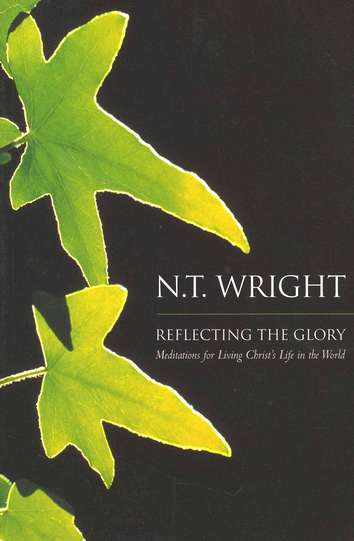
Here’s what I’ll be reading, as well as some other options.

So, three weeks from tomorrow, Lent will begin. And I will begin again to come to terms with all the truths that are so easily forgotten. How about you?

Four for (a snowy) Friday

So you probably should have seen this coming.

That’s right, songs about snow.

What sets these songs apart is that you don’t need snow to appreciate any of them.

Red Hot Chili Peppers – Snow // Ok, I know that this song isn’t really about snow. Who cares? “Hey Oh. Listen what I say oh.”

Matt Pond PA – Snow Day // Something we’ve had a few of around here lately.

William Fitzsimmons – Covered in Snow // I never miss a chance to fill your ears with more of “The Beard.” Mr. Fitzsimmons deserves an honorary doctorate in #Blife.

Sleeping at Last – Snow // This song comes from their intriguing “Yearbook” project. You are getting the added bonus of the video for two reasons. One, it’s really good. Two, it was edited by my brother-in-law.

deep thoughts by…

Know who this guy is?

You probably should.

He is the most powerful religious leader in the world.

That’s right, it’s the Pope.

Pope Benedict XVI to be exact.

It is common in some Evangelical circles to be suspicious of all things Catholic. And while there are certainly some aspects of Catholic theology and teaching that I don’t think squares with the Bible, the reading I’d like to point you towards shows more commonality than division.

Part of why I wanted to pass this post along is that it touches on about two or three conversations that I’ve had this week. So for your reading enjoyment on this snowy day…

What the Pope sees, and what he discusses with frankness, clarity, and compassion… is a world that has lost its story: a world in which the progress promised by the humanisms of the past three centuries is now gravely threatened by understandings of the human person that reduce our humanity to a congeries of cosmic chemical accidents: a humanity with not intentional origin, no noble destiny, and thus no path to take through history.

Or how about this…

Man strives for eternal joy; he would like pleasure in the extreme, would like what is eternal. But when there is no God, it is not granted to him and it cannot be. Then he himself must now create something that is fictitious, a false eternity. We have to show – and also live this accordingly – that the eternity man needs can come only from God.

Sounds more like John Piper or C.S. Lewis than what you might expect from the Pope. The WHOLE READ is worth your time. It comes from another blog called Kingdom People that I read pretty regularly. Thanks, Trevin.

Happy Snow Day!

Four (covers) for Friday

Schools are closed today in anticipation of snow.

Crazy.

I think we are forecasted to get an inch of snow. So on this day that it will be impossible to leave your house, here’s some music to pass the time.

First Aid Kit – Universal Soldier (Buffy Sainte-Marie Cover) / First Aid Kit is a couple of Swedish sisters (20 years and 17 years old) doing the folk thing.

Bon Iver – Come Talk to Me (Peter Gabriel Cover) / Got this song from my brother-in-law. Bon Iver and Peter Gabriel? Too much goodness in one place.

Lissie – Bad Romance (Lady Gaga Cover) / I realize that having anything “Gaga” on here is shameful. Just shameful.

J.Period & K’Naan – Relationships Lay (Bob Dylan Tribute) / Not a cover per se, but you know… K’Naan.

not done yet

Somehow, over the past month or so, four different books on Christian spirituality found their way into my hands. It isn’t that unusual for me to read that sort of thing, but it is strange that I would read four almost back-to-back so narrowly focused on one particular issue. The question that each was answering in their own way is “What does it mean to be a Christian?” Now you might think that it shouldn’t take me four different books to help me answer this question. Doesn’t there come a time when one doesn’t have to read any more books about it? I’ve been involved in ministry for nearly twenty years now. So haven’t I figured it out yet?

I suppose as the answer is both ‘yes’ and ‘no.’ I certainly have some convictions about what the Christian life is suppose to look like, but I don’t have all the answers. And each of these four books challenges me to look with fresh eyes at things that may have been previously ignored concerning the journey of faith.

While each brings a unique perspective, all four writers agree on at least one thing… that being a Christ-follower is about more than being able to check off the “I prayed the prayer” box. You may not be familiar with this sort of Christian spirituality, but it basically says that once people pray the “sinner’s prayer,” they have arrived. God has no further work to accomplish in an individual’s life. He or she is now “saved.”

Not that any of the writers are against that sort of thing. They probably even think that praying that kind of prayer is a fine sort of thing to do.  And yet, each was very clear to affirm that the Christian life is certainly about more than that. Much more.

So in an effort to turn this into a post that is actually helpful, I’ll offer up a few words about each book.

Radical: Taking Back Your Faith from the American Dream
by David Platt
(sample chapter)

I would largely agree with what my good friend Bobby had to say about it, so I’ll be brief.

The sub-title says it well. This book is meant to wake the church up to the reality that the version of Christianity that much of the West has bought into looks a whole lot more like the American Dream than Jesus. Perhaps you are familiar with the phrase “to comfort the afflicted and afflict the comfortable.” This book does the second half very well.

If you were to ask the average Christian sitting in a worship service on Sunday morning to summarize the message of Christianity, you would most likely hear something along the lines of ‘the message of Christianity is that God loves me.’ Or someone might say, ‘The messages of Christianity is that God loves me enough to send his Son, Jesus, to die for me.’ … ‘God loves me’ is not the essence of biblical Christianity. Because if ‘God loves me’ is the message of Christianity, then who is the object of Christianity? … Me.


Follow: A Simple and Profound Call to Live Like Jesus
by Floyd McClung
(sample chapter)

This book’s sub-title is half true. This is a clear cut, no nonsense approach to one’s life with Christ.  After reading a sentence or chapter, no one is in any way left scratching there head saying, “I wonder what he meant by that?”  McClung says what he means and means what he says. I would put this in the hands of anyone who has recently begun their journey with Christ, has an earnest desire to grow, and wants some handles on moving forward.

While long on simplicity, I feel like it comes up short on profundity. This book is so clear and certain, that I think it doesn’t do justice to the mystery and wonder of who God is. While I would whole-heartedly affirm that God is a God of order, I would as strongly argue that life with God can’t be reduced to formulas or bullet-points. I in no way think that the author believes that it can. I do think he has succeeded in making the complicated accessible. And that’s a good thing. Sometimes.

So this is our choice: Either we model ourselves on gods of our own making, or we allow God to mold us into His image, the very model of which is Jesus. Which will it be for you?


One.Life: Jesus Calls, We Follow
by Scot McKnight
(sample chapter)

I meet with a group of men on Monday mornings, and this is the one we are working through right now. These guys more or less trust me. So when I suggested we read and discuss it, no one balked. That is until they got to the first chapter. It was all about chasing after our dreams, and I could tell that they were inwardly rolling their eyes. For a couple, their outward expressions matched their inner feelings. “Really, we’re going to talk about our dreams? That’s original. Doesn’t nearly every book on Christian spirituality sound that same tired note.”

However, I had the benefit of having read the entire book. And what I knew was that McKnight’s re-look at the Christian life is broader in scope than the others I had recently read. There are fewer stones left unturned. And as this book seeks to expand one’s understanding of who Jesus is and what it means to follow him, it lends itself well to discussion. Not just discussion of the ideas, but the way in which our lives intersect the issues being raised. We’ll see.

When I hear Christians describe the Christian life as little more than soul development and personal intimacy with God, and I do hear this often, I have to wonder if Christians even read their Bibles.

Ouch.


Transforming Conversion: Rethinking the Language and Contours of Christian Initiation
by Gordon T. Smith
(sample chapter)

I think it important to make a habit of reading a book’s sub-title. They not only tell you what the book is really about, but also give you a flavor of the book itself. As you might guess, this is of the nerdier variety. Several years ago, I read another book by Smith on conversion called Beginning Well. I had never read an entire book on the subject. So when I saw this one, I thought “What more could he have to say?” The answer… plenty. I would recommend it for anyone who wants (or needs) to think deeply about the nature of conversion. Another book title could have easily been Conversion: 301.

God’s salvation is always portrayed in corporate terms, never to the exclusion of the individual, but always with the assumption that the individual is an integral member of a community of faith. Thus we cannot in the end conceive of or portray a biblical doctrine of conversion except with a distinctly ecclesial character. Religious experience, in other words, is never purely individual, personal, and interior. It will (and must) be individual, personal, and interior, but it will never solely be individual and interior. Further, it will not be individual and personal and interior unless it is grounded in the common experience of the people of God, unless it has a corporate dimension. True Christian experience is anchored in the common faith of the church, and it is the common faith that gives authenticity to our personal and individual faith. It is the church’s ancient and historic experience that gives meaning to our personal experience.

Yeah. What he said.

I guess what I really want to say about these books is that any of them are worth reading. It all just depends on who you are and where you are in your understanding of what it means to follow Christ. And since I’m not “done” yet, I’ll keep seeking out books that help me understand that journey better.