Four for (a Youthful) Friday

We live in a culture obsessed with youthfulness. This is neither a novel idea nor is it really open for discussion. It is a fact.

I don’t want to get all philosophical and morbid about it, but I’m pretty sure that all our attempts to hold on to youth stem from our fear of dying. It is amazing how much money we spend on postponing death or erasing the signs that indicate we are aging (i.e. getting closer to dying), as if somehow it could be avoided.

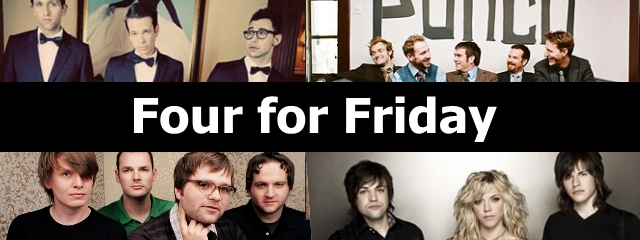
With that cheerful thought, I bring you four songs that underscore the point I’ve just made. They are all “young” songs, and I don’t mean Neil.

fun. – We Are Young (feat. Janelle Monae) // Currently, numero uno on iTunes singles chart. Maybe you’ve heard it.

Punch Brothers – Who’s Feeling Young Now? // Sound sort of familiar? Punch Brothers’ frontman, Chris Thile, used to be with Nickel Creek.

Death Cab for Cutie – Stay Young, Go Dancing // Strange juxtaposition of “death” and “young.”

The Band Perry – If I Die Young // I think you know how much it kills me to put a pop “country” group on here, but the “death” and “young” thing again was too much to resist.

Join me next week when I’ll encourage all of us to reflect on the decimation of the ozone layer.

my messy house

Like I said yesterday, I’m using Bread and Wine: Readings for Lent and Easter to guide my thoughts over the next forty-plus days. The entry for Day 1 is by Kathleen Norris, and I think she sums up particularly well what the Lenten season can be for all of us… young or old.

WHEN I’M WORKING as an artist-in-residence at parochial schools, I like to read the psalms out loud to inspire the students, who are usually not aware that the snippets they sing at Mass are among the greatest poems in the world. But I have found that when I have asked children to write their own psalms, their poems often have an emotional directness that is similar to that of the biblical Psalter.

They know what it’s like to be small in a world designed for big people, to feel lost and abandoned. Children are frequently astonished to discover that the psalmists so freely express the more unacceptable emotions, sadness and even anger, even anger at God, and that all of this is in the Bible that they hear read in church on Sunday morning.

Children who are picked on by their big brothers and sisters can be remarkably adept when it comes to writing cursing psalms, and I believe that the writing process offers them a safe haven in which to work through their desires for vengeance in a healthy way. Once a little boy wrote a poem called “The Monster Who Was Sorry.” He began by admitting that he hates it when his father yells at him: his response in the poem is to throw his sister down the stairs, and then to wreck his room, and finally to wreck the whole town. The poem concludes: “Then I sit in my messy house and say to myself, ‘I shouldn’t have done all that.”

“My messy house” says it all: with more honesty than most adults could have mustered, the boy made a metaphor for himself that admitted the depth of his rage and also gave him a way out. If that boy had been a novice in the fourth-century monastic desert, his elders might have told him that he was well on the way toward repentance, not such a monster after all, but only human. If the house is messy, they might have said, why not clean it up, why not make it into a place where God might wish to dwell?

Have mercy on us, Lord.

this joyful season

Ash Wednesday is tomorrow and it signals the beginning of Lent. I’ll be participating in a Lenten observance again this year, and I’m looking forward to this time of renewal. In addition to the few “indulgences” that I’ll be giving up this spring, I also plan to read Bread and Wine: Readings for Lent and Easter. That’s right, the very same book I read for Lent last year, and the year before that. The familiar repetition of Lent is something I have come to appreciate, and I am hopeful that this book will likewise become a familiar companion for me in the years to come.

As you can see from the cover, it is a collection of readings from Christian writer/thinkers spanning most of the church’s history. Some other contributors include, Kathleen Norris, Thomas a Kempis, Bonhoeffer, Kierkegaard, Kahil Gibran, Jurgen Moltmann, Wendel Berry, Mother Teresa, to name a few. Here are some thoughts to consider from the opening pages…

First popularized in the fourth century, Lent is traditionally associated with penitence, fasting, alms-giving, and prayer. It is a time for “giving things up” balanced by “giving to” those in need. Yet whatever else it may be, Lent should never be morose – an annual ordeal during which we begrudgingly forgo a handful of pleasures. Instead, we ought to approach Lent as an opportunity, not a requirement. After all, it is meant to be the church’s springtime, a time when, out of the darkness of sin’s winter, a repentant, empowered people emerges. No wonder one liturgy refers to it as “this joyful season.”

Put another way, Lent is the season in which we ought to be surprised by joy. Our self-sacrifices serve no purpose unless, by laying aside this or that desire, we are able to focus on our heart’s deepest longing: unity with Christ. In him – in his suffering and death, his resurrection and triumph – we find our truest joy.

Such joy is costly, however. It arises from the horror of our sin, which crucified Christ. This is why Meister Eckhart points out that those who have the hardest time with Lent are “the good people.” Most of us are willing to give up a thing or two; we may also admit our need for renewal. But to die with Christ?

Of course, for many a Lent observance is too much “religion” for their taste. My hope is that taking part in this decidedly outward, structured, formal religious observance will produce a change in me that the wishful-thinking, go with the flow, heart-felt, spiritual sentimentality of our day seems entirely incapable of producing.

If you have a desire to take part in an Ash Wednesday service and don’t have a place to do so, you are welcome to join us at Fellowship North tomorrow at 7am, noon, or 6pm for a brief (30 minutes) time of reflection, liturgy, and marking with ash.

tumbl-ed

I’m pretty sure I don’t need yet another outlet to put “me” out there, but I’ve recently rediscovered tumblr. I’ve had one for a while, but never really figured out why I had it or what I’d do with it.

Well, I think I get it now. I intend to keep my rarely posted on blog going, but I see tumblr as a place to put pictures, quotes, music, or other interesting things that I find on the intenet. So I guess if one were to think of my blog as a magazine (published bi-annually), the tumblr would would be more of a journal or notepad.

Or if my online presence were a house, it might break down like this…

Twitter // the front door – It is where I go out and people come in.

Instagram // the living room – This is where all the pictures are nicely hung.

Square Pegs Blog // the study – I do my thinking here.

Chino-esque Tumblr // the kitchen – Alison and I (and countless others) interact in the kitchen. Conversations both trite and meaningful take place here.  This is where daily life happens. You can subscribe like most any other blog through an RSS feed (Click HERE to subscribe).

Path // the bar – Rarely think of using it, but it is the only place I don’t interact with minors.

Facebook // the toilet – It stinks, but you have to have one.

Like I said, I probably don’t need another neglected social media “room.” But maybe – just maybe – having different places for different things will make life more manageable.

Four (best reads of 2011) for Monday

I know this is suppose to be a Friday thing. I wanted to get it done on Friday, but it just wasn’t meant to be. A number of the books I read in 2011 were honestly pretty forgettable. However, there were a few that stirred the heart or mind (sometimes both) enough for me to recommend them to others. They are all of the “religious” variety. I’m not apologizing for that, but I just want to be clear about what you can expect.

Transforming Conversion: Rethinking the Language and Contours of Christian Initiation
by Gordon T. Smith
(sample chapter)

If there is one book that I’ll be re-reading in 2012, it will be this one. Smith’s work on conversion is thought-provoking to say the least. If you are one cares about what the journey of faith (particularly what we call “conversion”) looks like, then I can’t more highly recommend this book. Like a good physician, Smith adeptly diagnoses what ails modern day evangelicalism. His ideas on how we might restore health don’t feel quite as thought through, but his insights are difficult to dismiss lightly. If nothing else, read the sample chapter and see if he doesn’t pique your interest. Plus I would really love to have someone to talk to about what he has to say.

Without doubt, the greatest problem with the assumption that conversion is punctiliar is that it rarely ever is. Many people do not have a language with which to speak meaningfully about their own spiritual experience for the simple reason that they have not experienced conversion as a punctiliar event in their lives. Whether they are second-generation Christians (more on this below) or whether their journey to faith and of faith does not fit the mold, they do not know how to tell their story, how to give expression to their encounter with God’s grace.

Movements of Grace: The Dynamic Christo-Realism of Barth, Bonhoeffer, and the Torrances
by Jeff McSwain
(sample chapter)

Movements of Grace came my way from my father-in-law who got it from my brother-in-law who is friends with the author. So that pretty much makes me and the author best friends. As is often the case, titles can be misleading which is why we need subtitles. In fact, subtitles all the way through the book could be helpful given its dense theology – which can at times sound like a foreign language. In some ways, this book is similar to the previous one in that they are both concerned with how God’s work happens in person’s life. Both suggest that modern-day American evangelicalism places too much emphasis on human volition as the precursor for God’s saving activity. When I finished, I had a greater appreciation for and understanding of trinitarian theology. It also caused me to go back and re-read Barth, and that’s probably a good thing. From what I understand McSwain was embroiled in some controversy with Young Life a few years ago, and reading this book certainly helps one understand why that might have developed.

For my years of Christian ministry before January 2000, I habitually proclaimed the gospel in a way that undervalued the union of Jesus Christ with both God and humanity. On the one hand, while I pad lip service to the fact of Christ being God, my articulated theory of the atonement defied it. I portrayed a God who sent Christ to assume the world’s sin so that God could stay pure in himself.

Love Wins
by Rob Bell
(sample chapter)

Speaking of controversial books, you might find the inclusion of Bell’s Love Wins on the list surprising. Honestly, there were several other books that I found more interesting than this one, but there is no denying that it created quite a splash – even before it was released. There is also no denying that the conversation concerning universalism is still alive and well. Let’s be clear, Rob Bell didn’t invent universalism (he isn’t even a true universalist). He simply moved the discussion from people’s living rooms into the church, and I think the discussion has by and large been a healthy one. Bell is particularly gifted at asking questions, and in a way he is only asking the same question (albeit in a different way) that the previous two books are asking – Who does “salvation” depend on? Me? Or Christ?

Really?

Ghandi’s in Hell?

He is?

We have confirmation of this?

Somebody knows this?

Without a doubt?

And that somebody decided to take on the responsibility of letting the rest of us know?
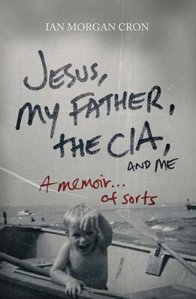
Jesus, My Father, The CIA, and Me: A Memoir… of Sorts
by Ian Morgan Cron
(sample chapter)

What is there for me to say about this book that I haven’t already said? I would simply like to add that this book in some ways falls in line with the other three. I quoted at length from his recollection of his first communion, and it is noteworthy that the ‘saving’ work was something that came from without, not within. I would love to quote more from this wonderful memoir, but I’m pretty sure that the author/publisher would hunt me down and demand some royalties. Of all the books on the list, this is easily the one that my vast readership would most appreciate.

So as you can see, a recurring theme in my reading this year has been on the way in which God works in people’s lives. In American church culture, we unsurprisingly place a great deal of emphasis on the choice of the individual for the efficaciousness of grace. Sure grace is a good gift of God, but it is something I can either choose to accept or reject. I’m coming to terms with (but far from having resolved) the notion that grace only becomes operative when I make a choice for it to be. Like I said, a very American sentiment. I’m just not sure how biblical it is. If grace only becomes saving grace through some choice of my own was it ever really grace to begin with?

Ok, enough heresy for one day. I really do love hearing what other people enjoy reading. Last time I did a book post, several people chimed in on things they appreciated. I’m especially indebted to the women who helped to broaden my appreciation for female authors. As you can see here, that is something of a deficiency in my reading diet, and I really would love to hear what sort of things you guys have found helpful recently.

Stay tuned for an honorable mention list sometime soon.

Four for Friday

Sorry, missed a week or two of Four for Friday. I know you’re life has been empty and hollow as a result. If you need to blame someone, blame Suzanne Collins. You’ve probably never heard of her, but she has written a relatively obscure trilogy that you might find interesting.

Ok, on to the music….

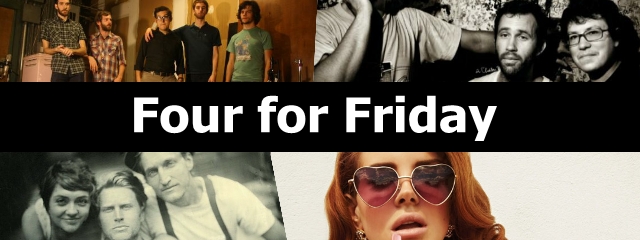
Lana Del Rey – National Anthem // I’m not familiar enough with Ms. Del Rey to know if this is meant to genuinely reflect her own beliefs or if it is a cultural critique. Surely it is the latter.

The Lumineers – Ho Hey (Fuel Session) // Hard not to like this song. Looking forward to their album release sometime in March.

Buxton – Boy of Nine // This is like lots of music I listen to (The Head and The Heart, Seryn, Typhoon) which is why I like it.

White Denim – Street Joy // From their wiki page… White Denim is a four-piece rock band from Austin, Texas. Their music draws influence from dub, psychedelic rock, blues, punk rock, progressive rock, soul, jazz, experimental rock with home-based recording, jamming approach, intense looping work and unusual song structures. Not sure what any of that means.

Later.

Four for Friday… is back

It has been several weeks since I’ve done one of these. There was music overload (as if that’s possible) there at the end of December, so I’m guessing you’ve appreciated the break. But now, back to business.

Teen Daze – Let’s Groove // This is a re-working of a classic from Earth, Wind & Fire.

Sleigh Bells – Comeback Kid // Sleigh Bells is back and I believe they have an album coming out sometime soon.

Boy & Bear – Part-Time Believer // “I hope you know how lucky you are.”

Taylor Swift & The Civil Wars – Safe and Sound // Love me some Civil Wars. Taylor Swift I can tolerate. This song is somehow connected to The Hunger Games movie coming out soon.

Bouus…

The Barr Brothers – Beggar in the Morning // That these folks got left off my end of year wrap-up is inexcusable. There is such a flurry of activity in putting those collections together that I’m often not in my right mind. This is better than most of the stuff that managed to find its way on there. Here they are bringing it on Letterman.

not alone

Both of you who regularly read my blog know that the church I attend is actively engaged in working towards a Gospel-centered vision of racial reconciliation and unity. This has been a long, challenging, but deeply rewarding process for us. We are far from having it “right,” but slowly we are seeing good things happen.

One of the difficulties in this journey comes when we look around and see so few like-minded travelers. So it can be refreshing to come across a story that reminds me that we are not alone.

It was the Fall of ‘93, deep in the buckle of the Bible Belt. I was a high school student in Junction City, Arkansas. An evangelist had come to our church and encouraged us to invite as many students as possible to come hear the gospel. Although I suspected that it might cause trouble, I invited the entire football team. We arrived at the church only to be met by a couple of deacons banning the African American students from entering the sanctuary. Soon the pastor came to our aid and insisted that my friends were indeed (ahem) “welcome.” In response, one deacon ran to his truck but yelled that he was coming right back—with a shotgun.

This is the first paragraph of a longer reflection entitled “Grace Over Race.” The blog belongs to Eternity Bible College, but the story belongs to Joey Dodson (an Arkansan, no less).

all of God’s children?

In the South, the conversation around race is almost exclusively framed in terms of Blacks and Whites. Given the history here, it is understandable why that might be the case. In no way would I ever want to minimize the discrimination that African-Americans have endured (and continue to endure) here in the Deep South. Little Rock in particular has an ugly history of which most of the country is probably aware.

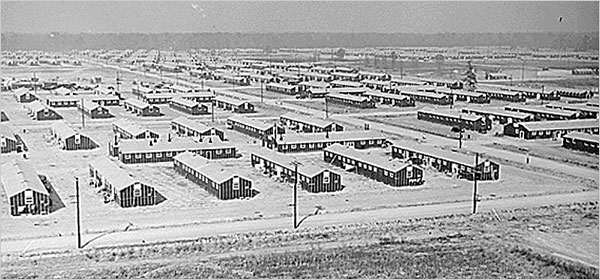
Yet there is another ugly episode in United States (and Arkansas) history that often gets overlooked in conversations centered on racism. From 1942 to 1946, Japanese Relocation Centers (Internment Camps) were used to “house” over 100,000 Japanese-Americans, most of whom were American citizens. These internment camps were located in various states west of the Mississippi.

Two such Relocation Centers, Jerome and Rohwer, were located in southeast Arkansas.

The war-time status is sometimes cited as justification for the necessity of the internment. However, as always seems to be the case with racism, the underlying issues of power and money were just below the surface. An investigation as recent as 2011, uncovered suppressed evidence that would have helped repudiate the idea that Japanese-Americans were a threat to national security. Something most everyone already knew to be untrue.

It wasn’t until 1988, during the Reagan administration, that a formal apology was issued by the United States government.

I’m sort of a novice when it comes to understanding the reasons why Asian-American discrimination isn’t as widely recognized in our country. My guess is it has something to do with the perceived “success” of Asian-Americans living here. More likely it has something to do with Asians being viewed as a lesser threat to the majority way of life. If and when the majority group does feel threatened, then predictable racist responses can be expected.

Regardless of how well-intentioned our efforts are, as long as the conversation about racial inequality centers exclusively on the white-black divide, then other races are marginalized. It is sad to think that even in our attempts to address racial inequality, we can unknowingly perpetuate it.

Now is the time to rise from the dark and desolate valley of segregation to the sunlit path of racial justice. Now is the time to lift our nation from the quick sands of racial injustice to the solid rock of brotherhood. Now is the time to make justice a reality for all of God’s children.

audible sacraments

Quick one here. Finishing up with a final helpful thought from Scripture and the Authority of God by N.T. Wright. In his discussion of preaching the Word, he describes sermons as “audible sacraments.” And as an Anglican bishop, he is someone who doesn’t throw the “s” word around lightly. So here we go…

[Sermons] are not simply for the conveying of information, though that is important in a world increasingly ignorant of some of the most basic biblical and theological information. They are not simply for exhortation, still less for entertainment. They are suppose to be one of the moments in regular Christian living when heaven and earth meet.

Not sure anyone would ever describe my preaching as the meeting place of heaven and earth, but holding out that hope for my teaching ministry (or anyone’s) seems like a worthwhile goal.